
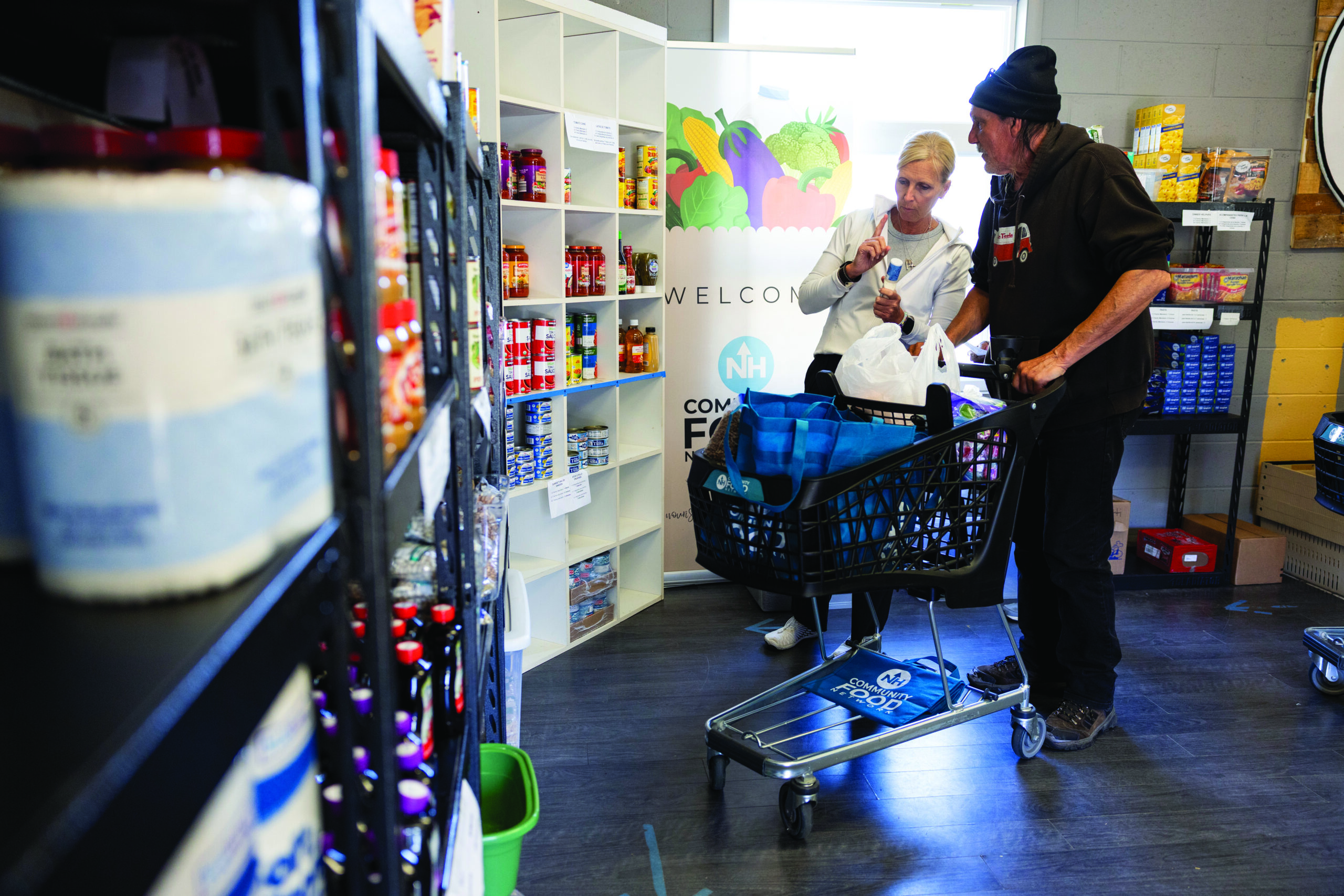
Mosaic CCDA: A Model for Stability and Community
Mosaic CCDA offers a host of programs like the Career Pathway Institute, Resale Store, Community Assistance Program, and Feel Good Fridge to tackle poverty and food insecurity at their roots.
“When you serve here long enough, you begin to build real relationships with people,” said Pastor Will Gaddy, Mosaic CCDA life coach and chaplain. “It becomes about more than just providing food — it’s about walking alongside our neighbors, helping them navigate life’s hardest questions: How can I pay my bills? Where can I find support for my mortgage? How do I keep my lights on? That’s what Mosaic is about. We’re not just a place for food — we’re a resource center.”
In partnership with Whirlpool and Feeding America West Michigan, Mosaic’s Feel Good Fridge anchors a steady response to food insecurity. Three days a week, neighbors sit in rows as Pastor Will Gaddy offers a brief prayer, then, under coordinator Jimmyella Toney’s guidance, they form a line and move through, choosing from fresh and frozen meats, produce, deli items, breads, desserts, and more.
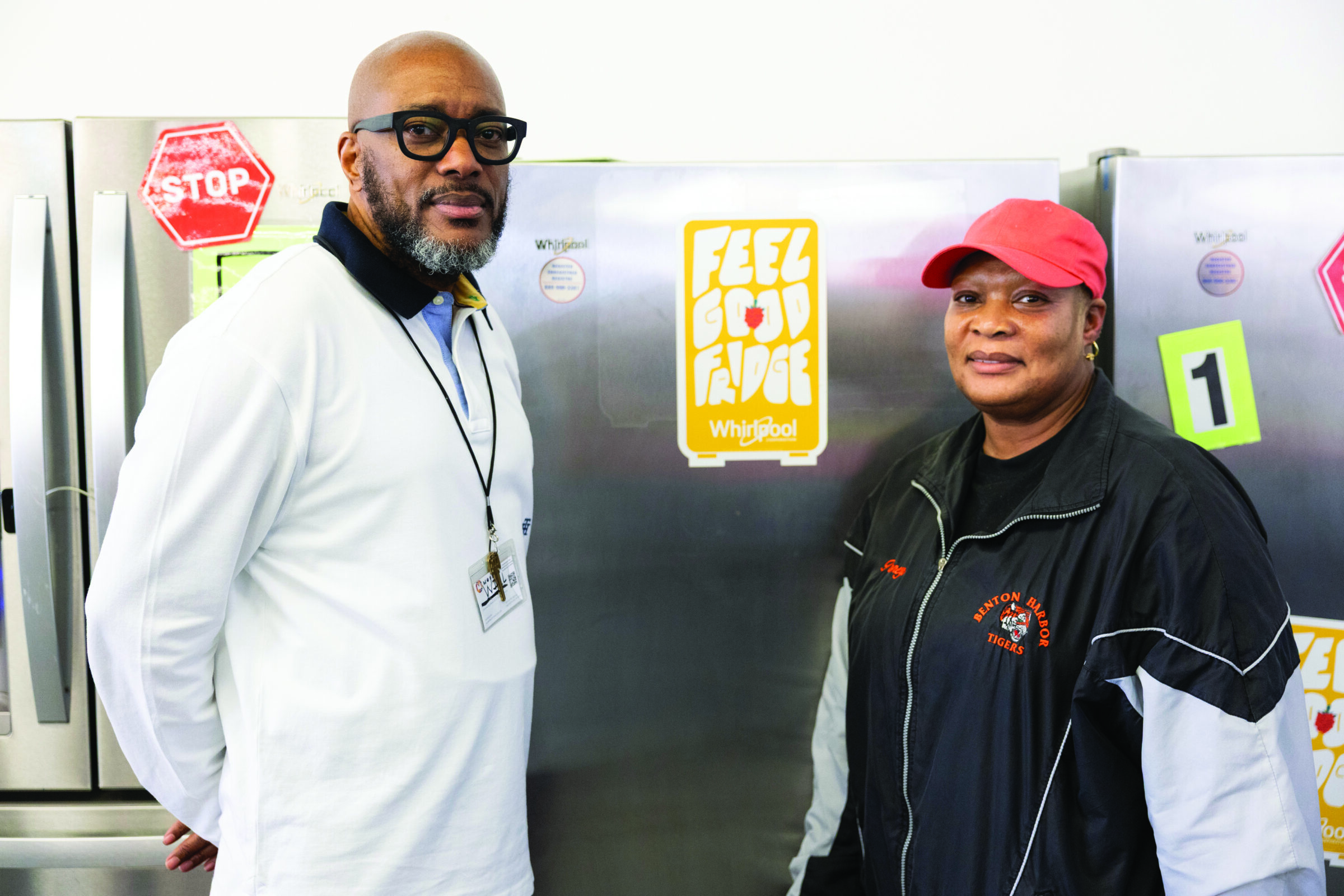
The number of neighbors relying on the Feel Good Fridge has steadily grown from 35 to up to 75 people, reflecting a deepening need within the community. In 2025, the Feel Good Fridge distributed 92,204 pounds of food to 10,476 total people, which includes 3,551 children, 3,364 seniors and veterans, and 4,029 total households.
Barbara, who comes to the Feel Good Fridge every day it is open, said, “I am very grateful for what I get here. I’ve been a widow since 2020, and I lost my son three years ago, I’m on my own and I live on my Social Security. Mosaic allows me to save a little extra money for anything I need to repair. I would absolutely recommend coming here.”
St Augustine’s Pantry: Trust, Resources, and Belonging
For St. Augustine’s Episcopal Church, contributing to community food access is a natural extension of its faith and commitment to human dignity. Faith fills the soul and the church’s pantry fills the body.
Coordinated by longtime St. A’s member Les Knickerbocker, the pantry stands as a welcoming space shaped by the church’s commitment to progressive, Reformed thought and action. This approach ensures that neither the church nor its pantry excludes anyone. As Les puts it, “Everyone is welcome — that’s why we have a good reputation in the community, because people know we don’t hold anything against anyone.”
Beyond its welcoming spirit, the pantry extends care through language itself. A greeter fluent in Spanish, French, and English provides support so every visitor can move through the space with ease. For many Spanish-speaking guests, this fosters a sense of familiarity and confidence, where questions come naturally and needs are expressed without hesitation. The same atmosphere of respect and dignity is extended to members of the LGBTQIA community, who are equally welcomed and supported.
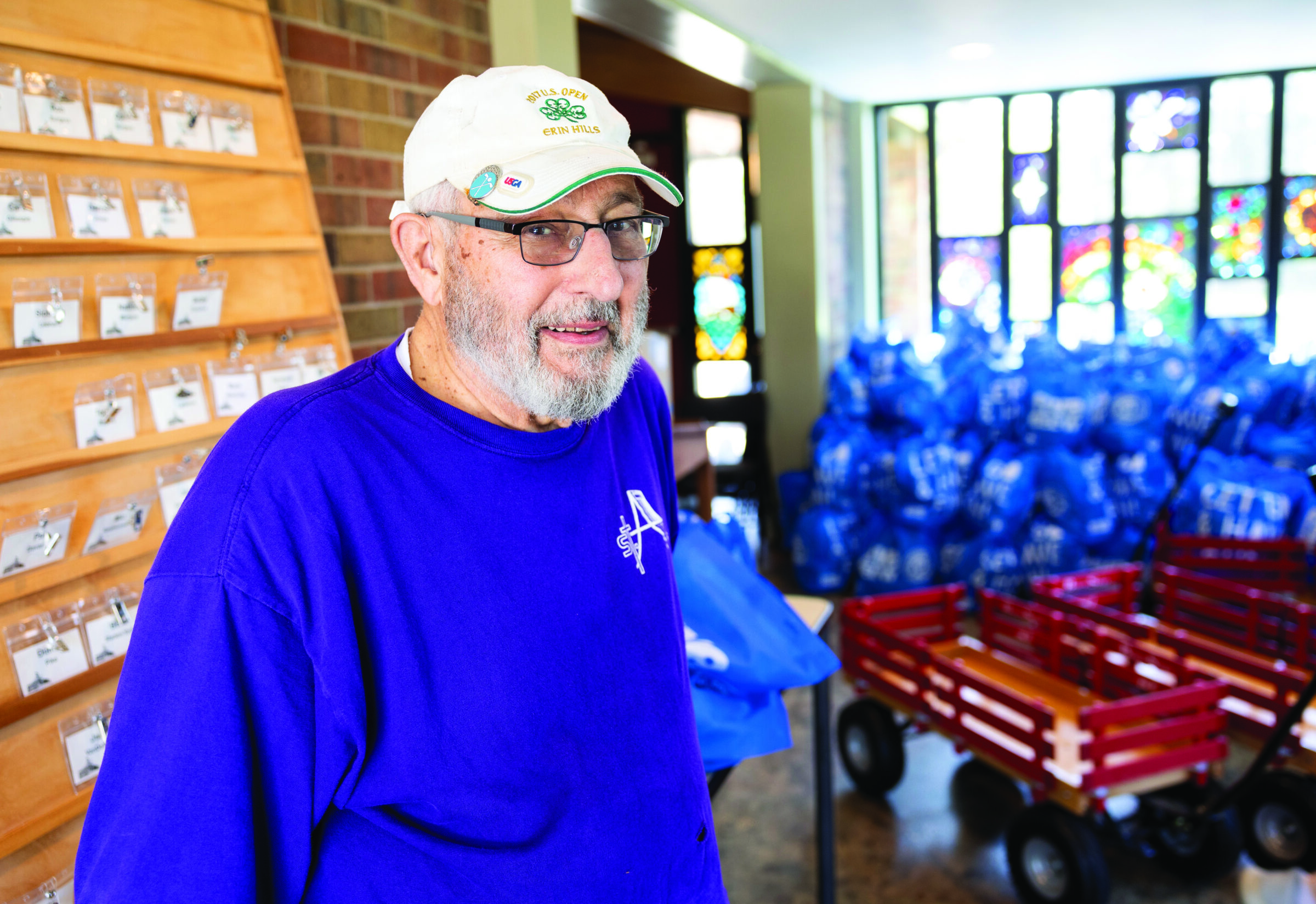
A key result of the church’s commitment to inclusion is trust. As guests experience understanding rather than judgment, the word gets out, Les said. What begins as a single visit often turns into a return, as people come to see the pantry not just as a resource, but as a place where they are genuinely seen and respected. In this way, its focus on dignity and accessibility continues to build a connected community.
Trust in the organization was a factor in making it the food bank’s top Berrien County partner in 2025, as Les and his volunteers distributed more than 90,000 meals worth of food to more than 4,500 households.
A visitor of the pantry, who chose not to share his name, said, “My hours were cut, but the bills didn’t change. This pantry helps a lot. They welcome everyone, not just church members — it really feels like a place that cares. This place makes you feel good.”
New Heights CCDA: Moving neighbors from scarcity to stability
New Heights CCDA works to move community members from scarcity to stability. In practice, this vision unfolds through wrap-around services, job training programs, and the Community Food Network.
Serving the Benton Heights neighborhood, New Heights staff determined that neighbors needed a food security model that went beyond immediate need to address the deeper, interconnected challenges they face, said Chris Britton, executive director. New Heights also places a strong emphasis on building community among the people they serve.
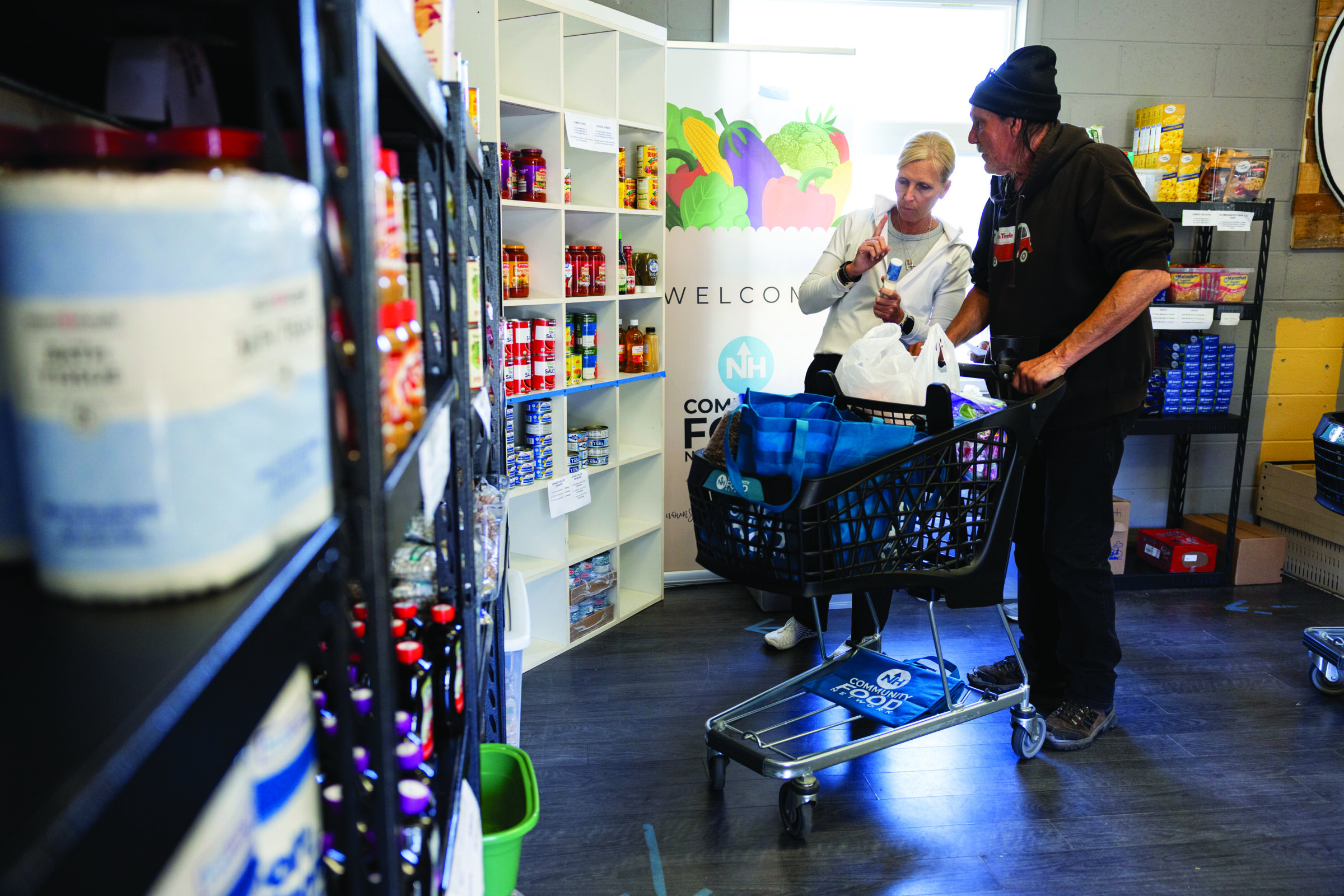
New Heights CCDA uses “food security groups” that meet twice a month at the agency’s Community Food Network. Once there, neighbors are given a dignified shopping experience in a brightly lit area where they can select from significant amounts of fresh produce, meats, dairy, canned goods, bread, and more.
Much of their food is sourced from partners including Feeding America West Michigan, Meijers, Walmart, Dollar General, and Abundant Acres. The agency also has received a grant from the ValleyHUB in Kalamazoo.
According to Britton, “each food security group has 30 members in its enrollment, and on average, each household is around 3, so 4 times 30 is 120, and 120 times 3 is 360, so essentially we are feeding 360 people twice a month.”
There are no special eligibility requirements — members simply share that they don’t have enough food to support themselves or their family, and that is all that needs to be disclosed.
“Members are eligible to join for two years, and the idea is that we’re walking alongside them for those two years, and during that time we have significantly alleviated their food needs, allowing them to invest time and resources in other places.”
Participants frequently describe the pantry as a source of “relief” and express high satisfaction. Brian, a member of the food security group, said the Community Food Network has “helped me and my family tremendously,” noting, “ever since I’ve been coming here, they’ve been good to me. I have no issues at all.”