
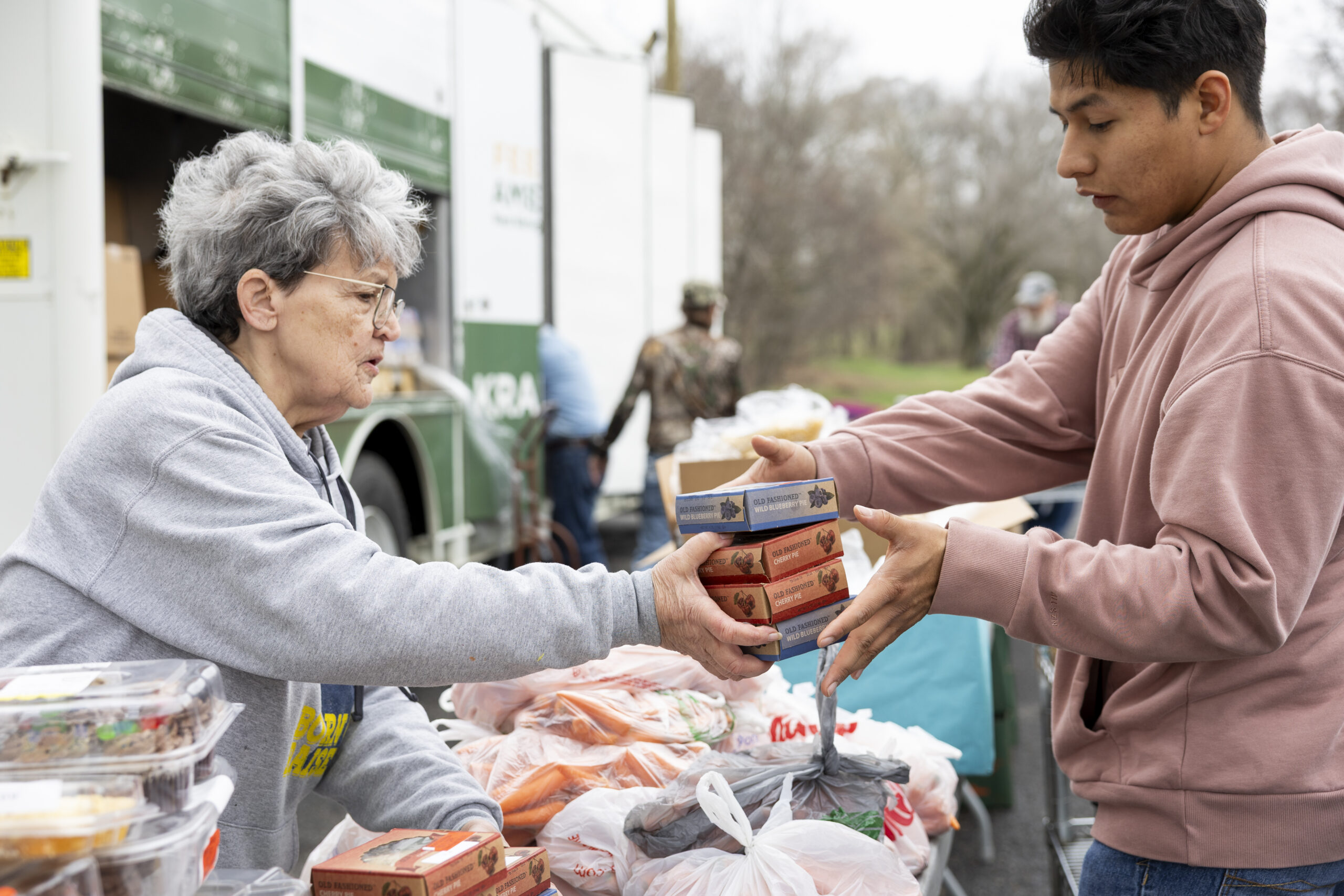
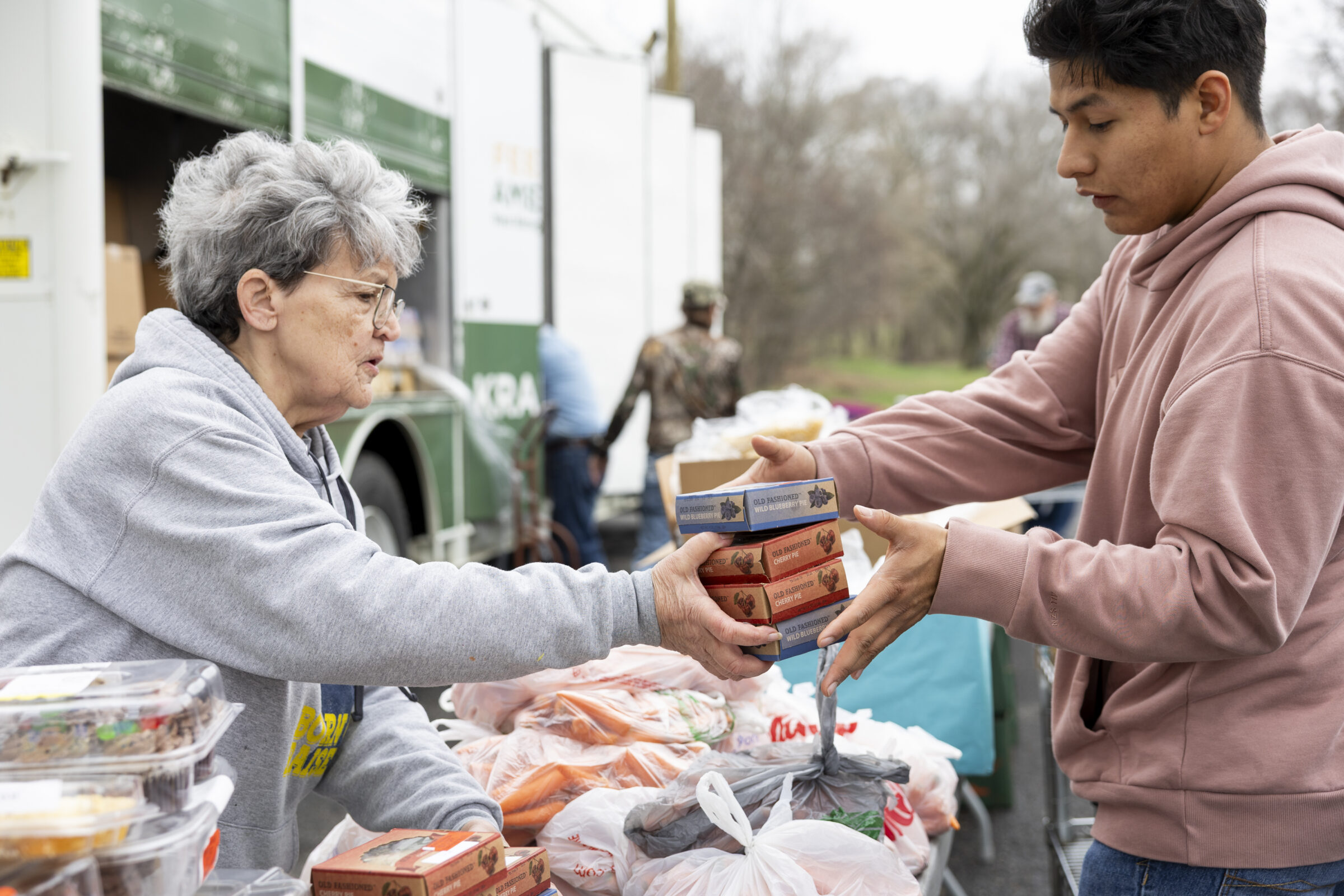
KENTWOOD — For the third year in a row, a national study shows the number of people in West Michigan and the Upper Peninsula who struggle to afford enough nutritious food has remained at a stubbornly high rate of 14.8 percent. This means that 1 in 7 people overall in the food bank’s 40-county service area make tough choices between food and other basic necessities.
The number of children in food-insecure households also remains persistently elevated. Data show that 18 percent of children, or 95,820 children, live in households that struggle to afford enough nutritious food.
The findings are part of the annual Feeding America Map the Meal Gap study, released today (JULY 28), that tracks food insecurity in every county in the United States. Feeding America uses publicly available data to create a searchable map that shows food insecurity rates in every community in the United States. The 2026 map is built on publicly available data from 2024.
Along with the map, the study calculates the gap between the number of meals people need and the number they can acquire through their earnings and federal food assistance. The study estimates that the meal gap in the food bank’s service area is nearly 69.6 million meals. Neighbors fill the gap in part by turning to the charitable food system.
“Behind every number is a child, a family, a senior, a veteran, a neighbor working hard to make ends meet,” said Pattijean McCahill, Feeding America West Michigan President and CEO. “The study affirms our experience of high demand in 2024, and the demand continues today as our neighbors experience higher food, fuel, and housing costs. At the food bank, we continue to invest more each year in food, community partnerships, and solutions that help us serve more neighbors facing hunger. We don’t see the need ending. In fact, we expect it to grow this year by at least an additional 50,000 households.”
Feeding America updates the Map the Meal Gap study annually, and food banks use the data to allocate food resources in the areas they serve.
Key points from the study:
- The 2024 food insecurity rate of 14.8 percent is a slight uptick of 0.4 percent compared to 2023 for the food bank’s 40-county service area.
- The factors that contribute to food insecurity have not changed. Neighbors continue to be squeezed by high food, fuel, and housing prices.
- Forty percent of food insecure households make too much to qualify for federal nutrition assistance programs.
- Data shows that food insecurity rates continue to remain higher than average in deeply rural and chronically economically depressed communities. The 10 counties in our service area with the highest food insecurity rates are rural counties (Lake, Mackinac, Iron, Luce, Baraga, Oceana, Ontonagon, Osceola, Schoolcraft, and Mecosta).
- Data collected independently by the food bank aligns with the Map the Meal Gap findings. Attendance at fixed pantries and Mobile Food Pantry distributions rose dramatically in late 2021 and attendance has remained at consistently high levels ever since.
- The food bank’s service area food insecurity rate of 14.8 percent was slightly better than the state average. The Michigan average is 15.1 percent, more than 1.5 million Michiganders.
Food insecurity occurs when a household cannot access enough food due to a lack of money and other essential resources. It is often linked to one or multiple factors related to household income, unanticipated expenses, access to affordable health care, the surrounding social and physical environment, and barriers to opportunity.
Map the Meal Gap uses publicly available data from U.S. Department of Agriculture (USDA) Economic Research Service, U.S. Census Bureau and Bureau of Labor Statistics to estimate local food insecurity at the county, congressional district, and state levels. The study also estimates local meal costs and food budget shortfalls using food price data from NIQ, based on USDA’s Thrifty Food Plan, and grocery sales tax data for every county and state in the country.
The 2026 report is the last one for which USDA data will be available. Although USDA has stopped collecting food security data, Feeding America will continue to estimate local food insecurity and meal costs in the years ahead.
To view the searchable map, visit FeedingAmerica.org/MaptheMealGap. For more information about Feeding America West Michigan and how we are working with our community to end hunger, visit feedwm.org.
# # #
About Feeding America West Michigan
As a member of the national Feeding America food bank network, Feeding America West Michigan supports hunger-relief efforts in 40 counties in West Michigan and the Upper Peninsula. In 2025, the food bank partnered with more than 800 community organizations to distribute 28.7 million meals worth of food to more than one million households through fixed-site pantries, mobile food pantries, summer meal programs, and more.
About Feeding America
Feeding America unites the country ensuring everyone has access to food and a thriving future. Feeding America support tens of millions of people as part of a nationwide network of 250+ food banks, 20+ statewide food bank associations, 10+ regional co-ops and 60,000+ agency partners, food pantries and meal programs. Feeding America partners with people experiencing food insecurity, policymakers, organizations and supporters united with the unwavering commitment to provide nourishing food and work to end hunger at its roots so everyone can live fuller, healthier lives.
###
Media Contact: Anne Hamming,
Marketing & Communications Manager
AnneH@FeedWM.org / 616.498.1936